Source, flow, sink. Drawn once, run as one process.
You draw the route on a canvas. The same binary polls the sources, runs the nodes and delivers to the sinks. There is no second service to deploy.
- source
Every reading becomes one record.
Adapters emit
CanonicalMachineData: source, timestamp, machine, status, axes, spindle and free-form metadata. Quality travels with it, per record and per value: good, uncertain or bad. A source that goes silent produces an offline record, not a gap.modbus 103maps tospindle.speedcanonical record (telemetry.v1) { "source": "modbus", "timestamp": "2026-08-01T09:30:00Z", "machine": { "id": "PLC-01", "name": "Assembly Line PLC" }, "status": { "state": "running" }, "axes": [ { "name": "X", "position": 12.5, "unit": "mm" } ], "spindle": { "speed": 8000, "load": 41.5 }, "quality": "good", "metadata": { "temp": 61.2 } } - flow
Route, filter and reshape on a canvas.
Wire nodes together and each source can take its own path to its own sinks. Only the JavaScript transform starts a JavaScript engine; every other node is native Rust.
- source
- filter
- branch
- map
- transform
- http
- sink
- DSL for the common case. Filters and field math run against the in-memory record with no JSON round trip.
- JavaScript when you need loops or regex. Sandboxed: no filesystem, no network, an 8 MB heap and a 100 ms deadline by default.
- Edit with Node-RED's moves. Quick add on a dropped wire, link nodes across tabs, groups, wire splicing and Ctrl+F.
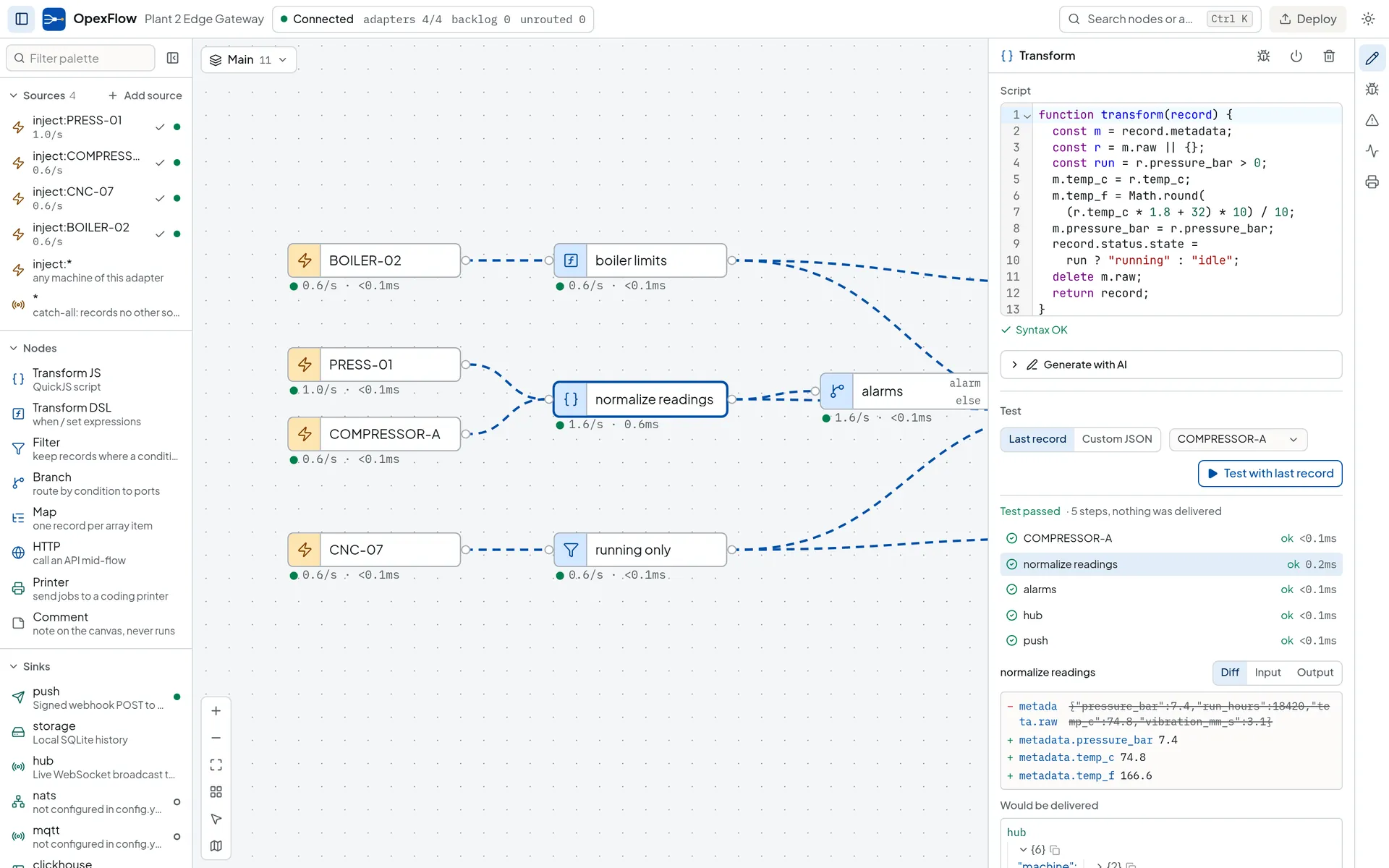
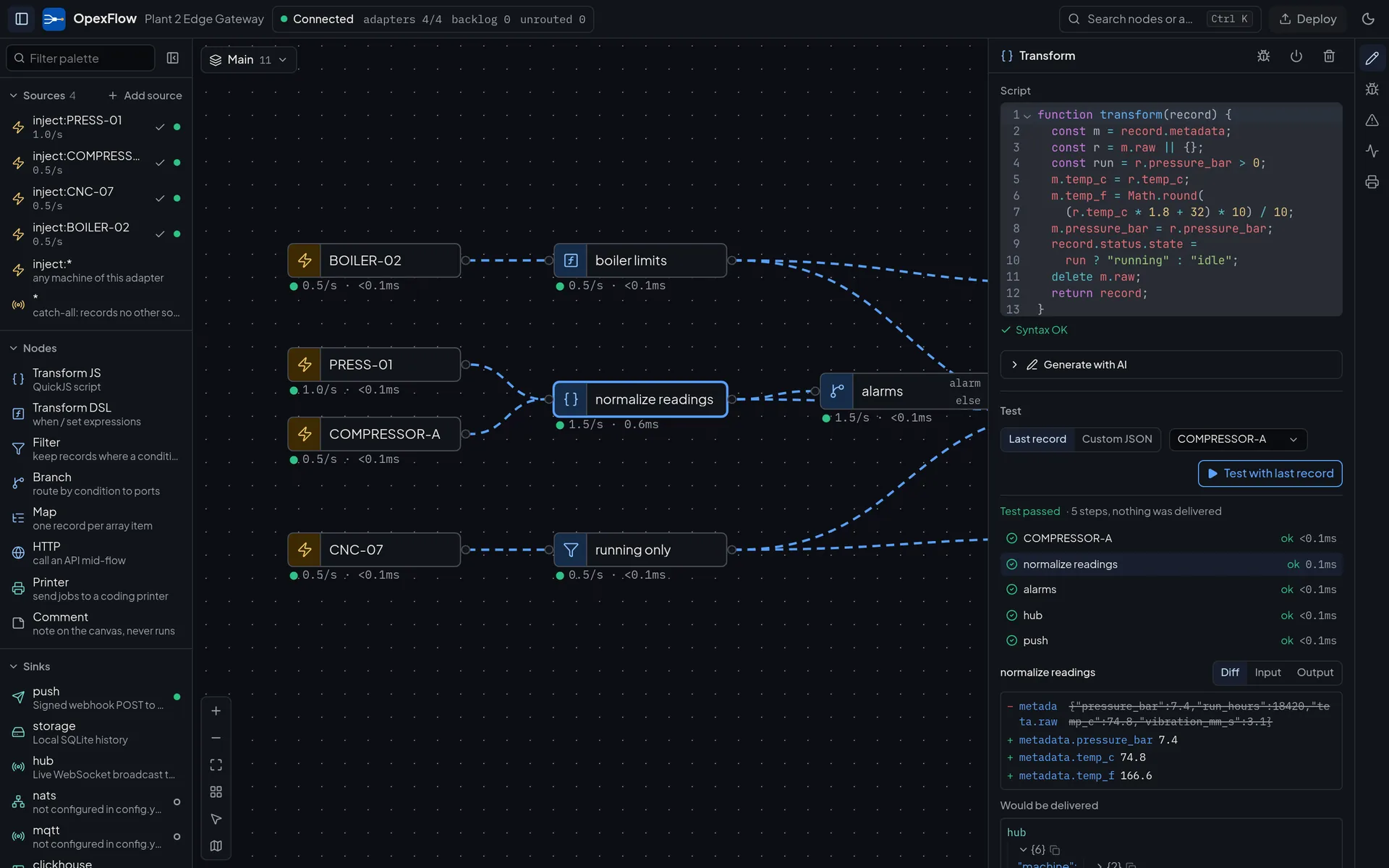
- Test before you deploy. Run a node against the last real record from its source and see each step, the diff and what would be delivered. Nothing is sent.
- Optional script drafting. Describe a rule in plain language and an OpenAI-compatible endpoint that you configure writes the script. The server validates it before it lands.
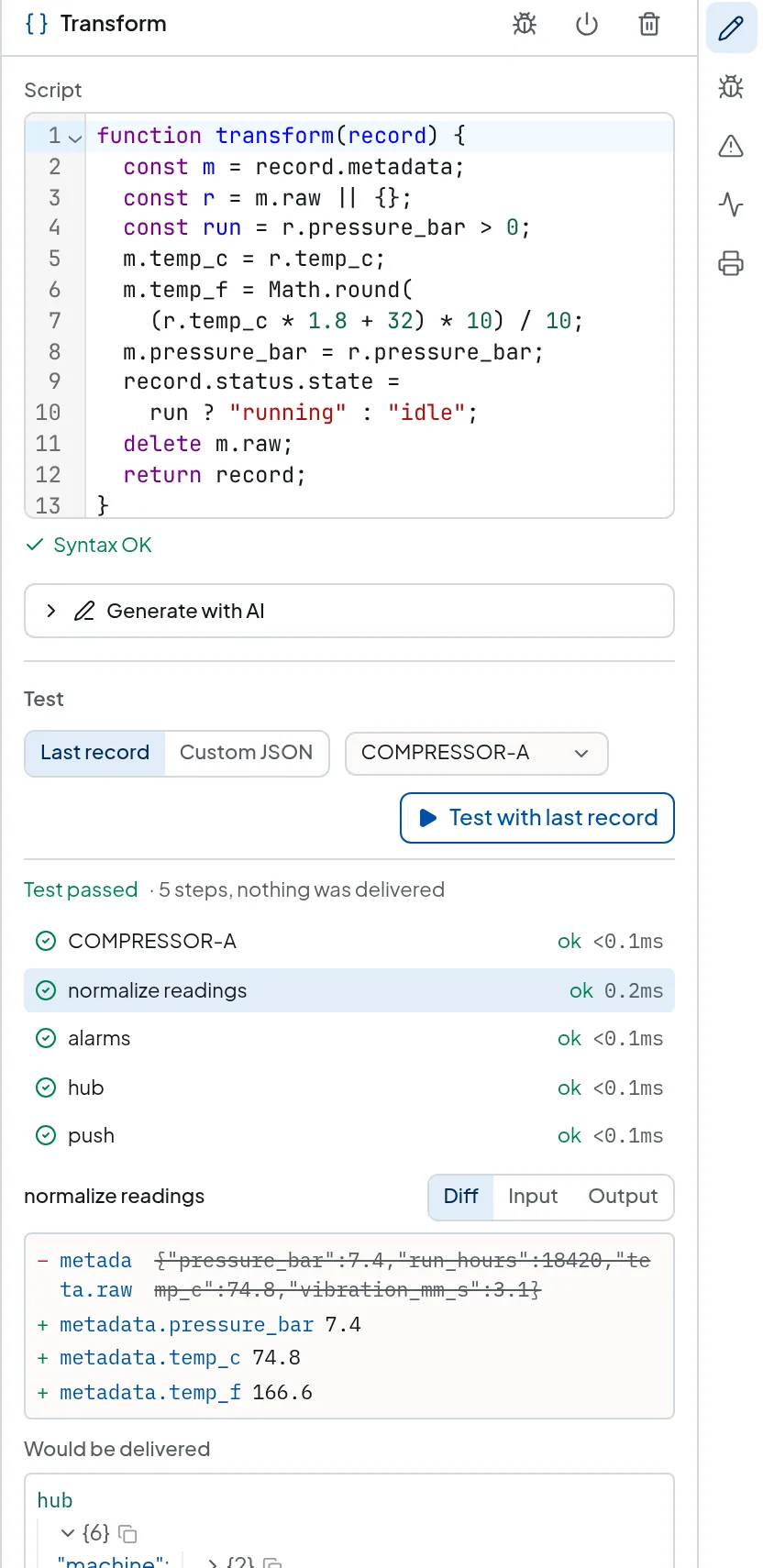
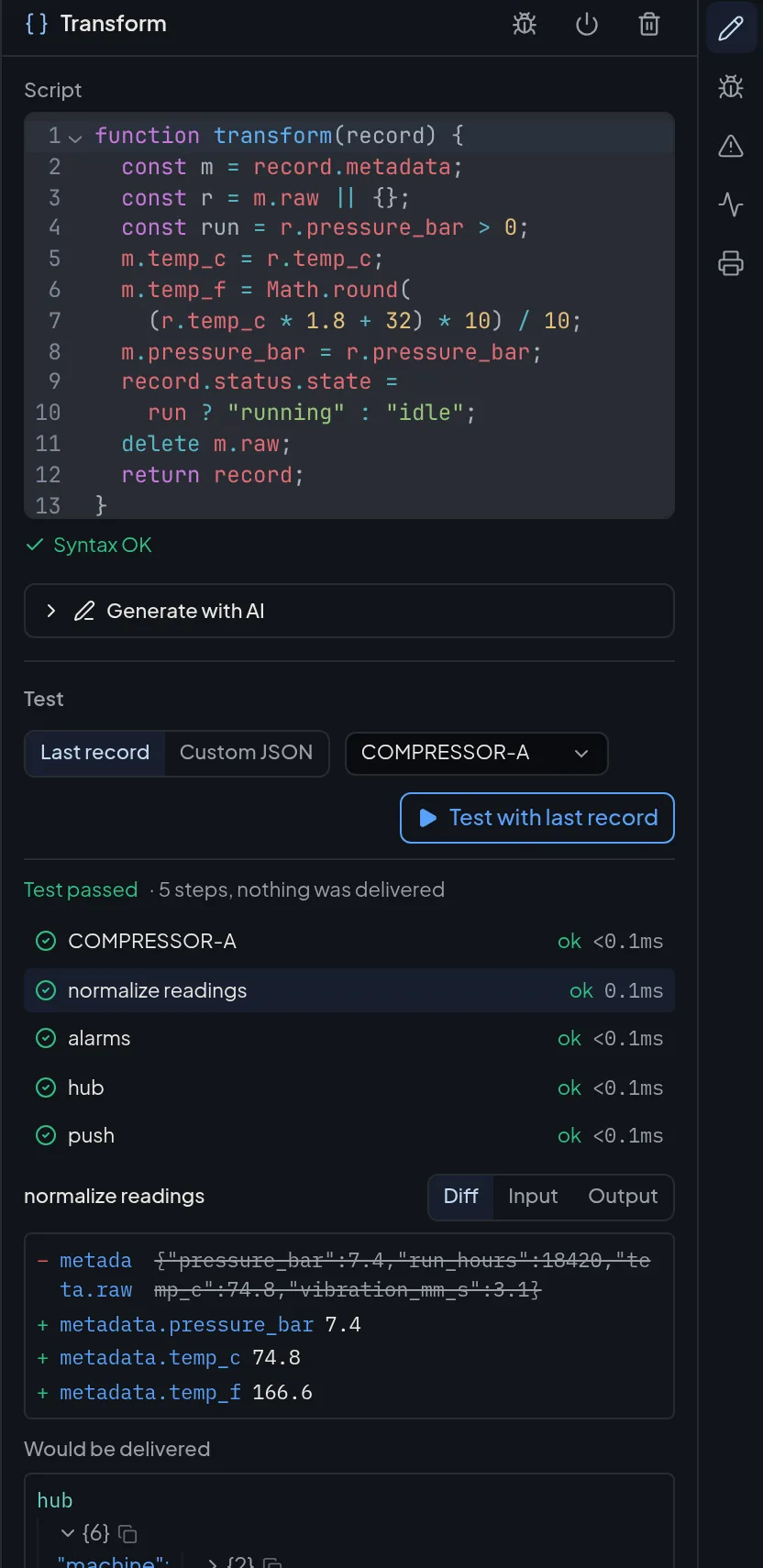
transform.dsl # keep only hot or vibrating machines when metadata.temp > 80 || metadata.vib > 5.0 set metadata.alert = true set metadata.temp_f = metadata.temp * 9 / 5 + 32transform.js function transform(record, ctx) { if (record.metadata.temp > 95) return null; // drop record.metadata.risk = record.metadata.temp * 0.8 + record.metadata.vib * 1.2; return record; } - sink
Fan out to every destination, concurrently.
Each route picks its sinks and a record goes to all of them at once, each under its own deadline (5 s by default). One slow sink does not hold up the others, and the poll loop never waits on the network.
- pushHMAC-signed POST to OpexMX or any receiver, through the durable queue.
- natsPublishes to a NATS subject, one subject per machine.
- mqttPublishes to an MQTT topic.
- storageSQLite history with retention by days and by size.
- clickhouseBatched writes to a ClickHouse table.
- postgresBatched writes to Postgres or a TimescaleDB hypertable.
- debug
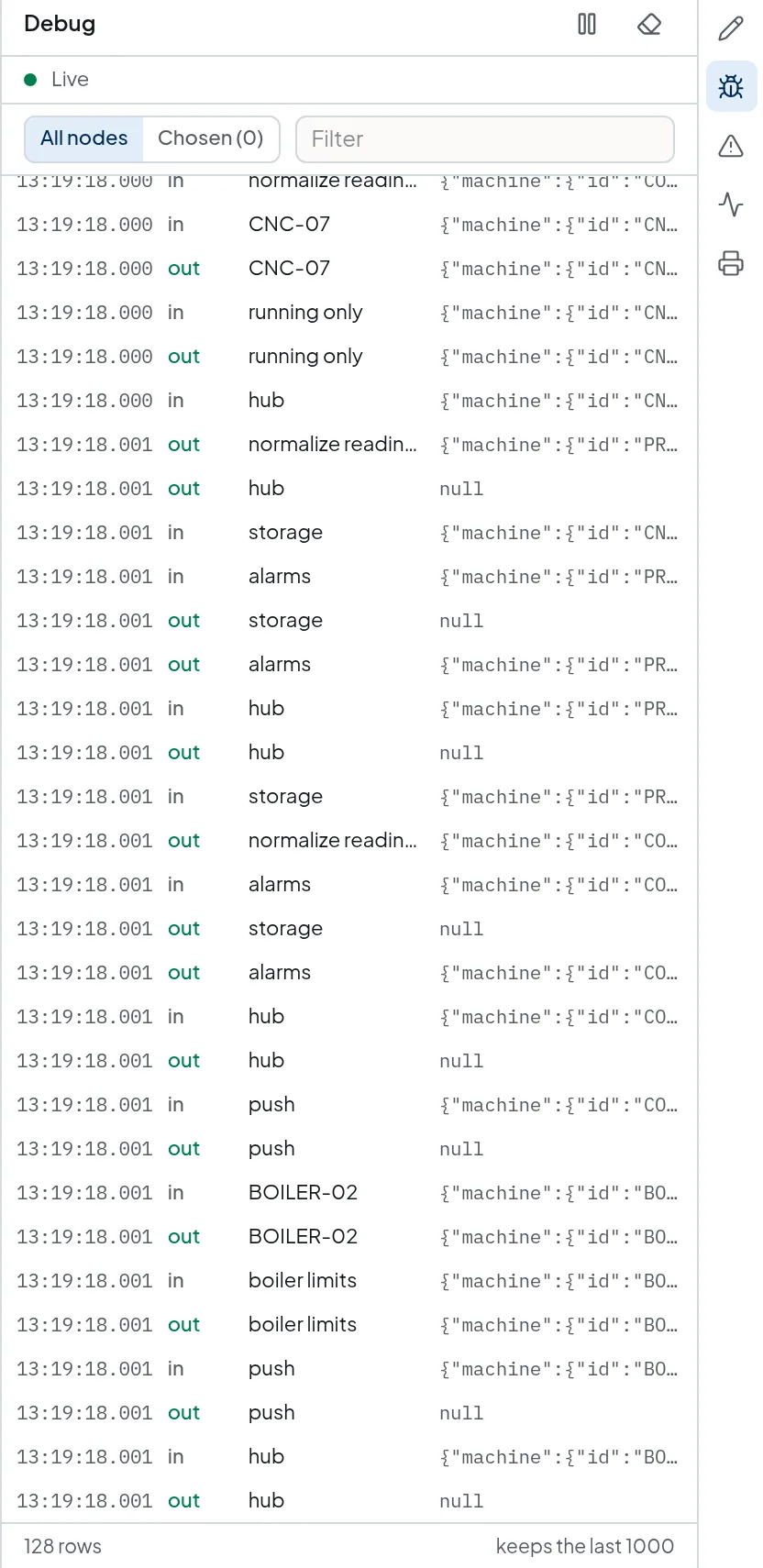
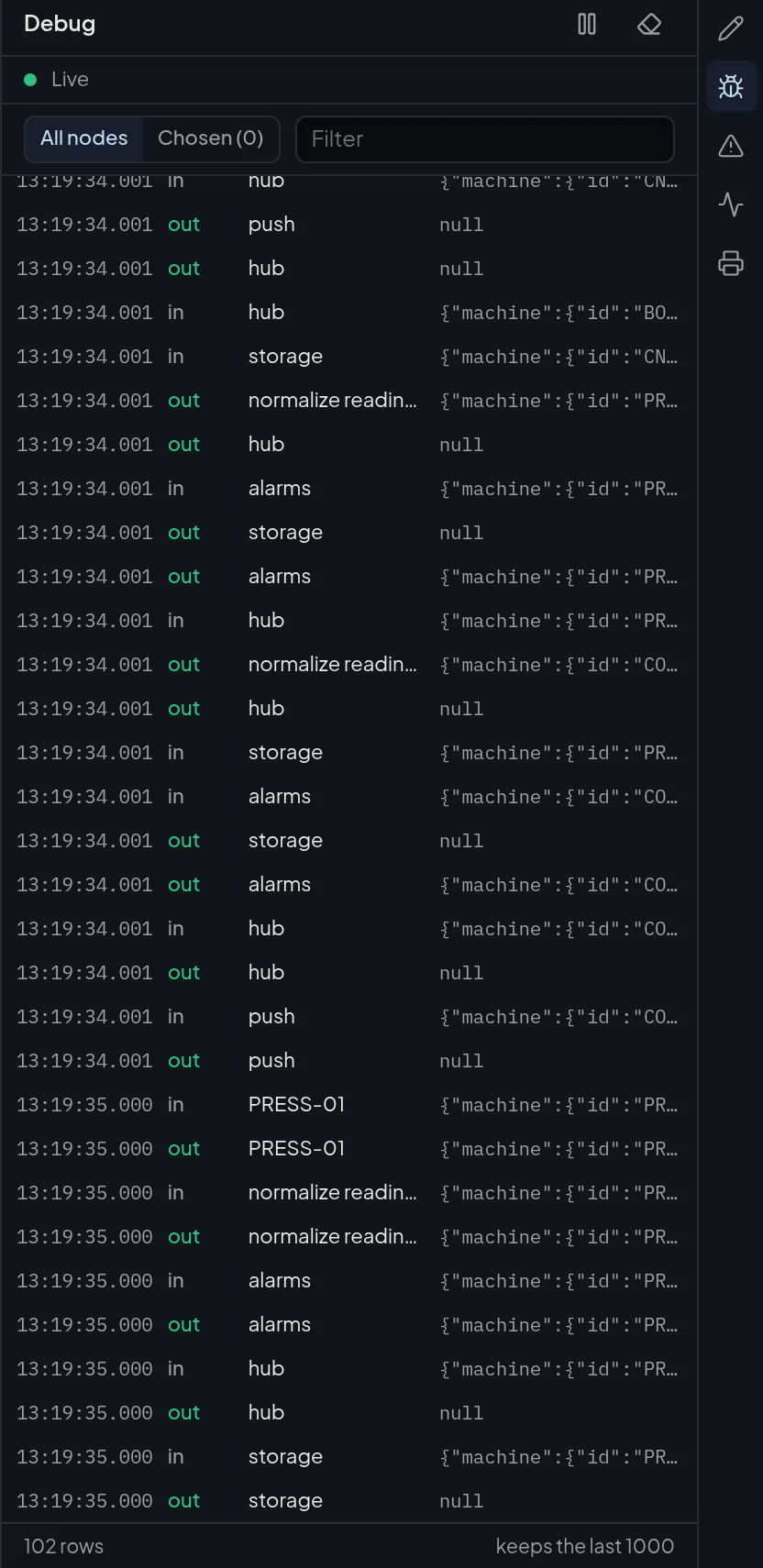
Watch every record move.
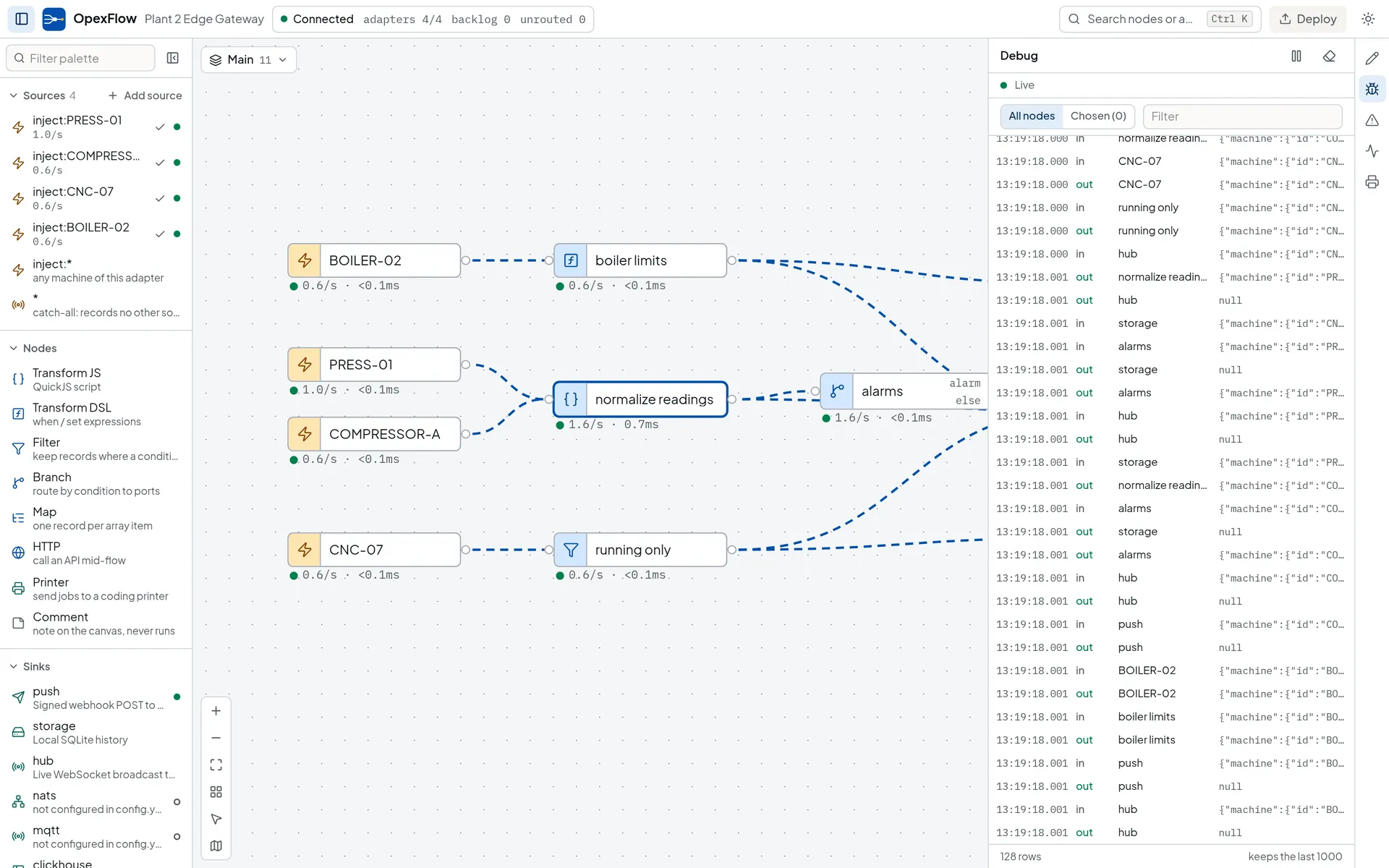
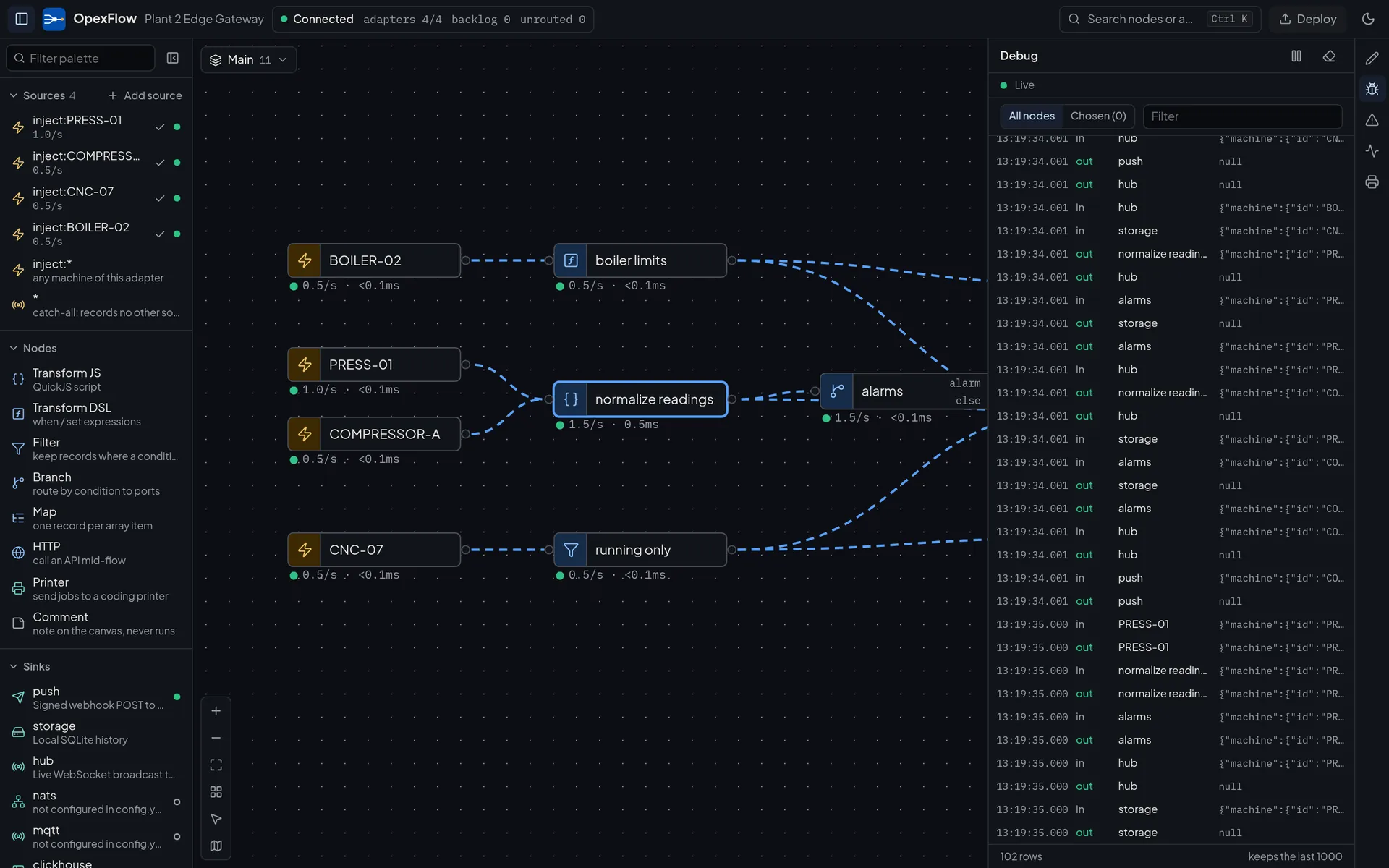
The debug panel streams what each node received and what it sent on, as the records flow. Narrow it to the nodes you chose, or leave it on all of them. Live record rates and the average run time sit under every node on the canvas.
From download to first record in minutes.
Run one binary, connect a PLC, a CNC or a webhook, and watch the records arrive in the editor.
- One binary
- Raspberry Pi to rack server
- Signed delivery with retries
Sizing questions or an air-gapped install? Email marketing@opexcg.com or read the quick start.